
Ten years inside hydroponic fodder
10 Years of Hydroponic Fodder Experience. Yours for US $29.
10 years300+ systems10 countriesIndependent advice
I've spent a decade learning what works, what doesn't and what really matters when planning, growing and operating hydroponic fodder. I've put that experience into one practical guide, so you can start better informed.
Instant access · Practical advice · No subscription
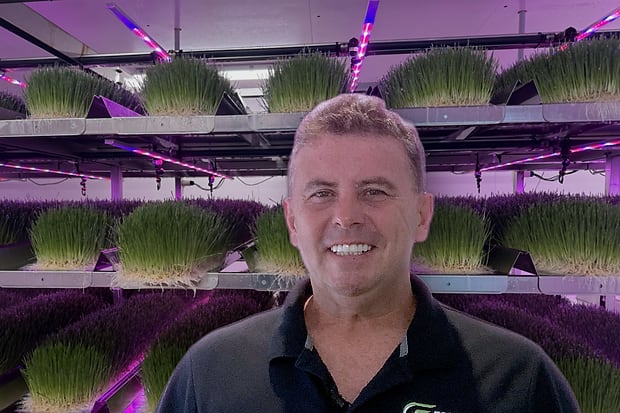
- Since 2016
- Working in hydroponic fodder
- 10 countries
- Systems built or advised on
- 300+
- Systems built
- Independent
- No equipment sold, no supplier kickbacks
The commercial case
Before you spend thousands on a system, spend US $29 understanding what you're getting into.
Hydroponic fodder looks simple from the outside: seed, water, trays, about six days. The growing is the straightforward part. A system is a capital purchase, and the decisions made well before the first tray goes in are the ones that shape what it costs you to run.
Decisions that materially affect the outcome
- Sizing the system to the herd you actually have
- Seed cost, and the germination rate you specify
- Climate, airflow and how the growing space behaves
- Water quality, hygiene and mould management
- The daily labour the system will genuinely need
- Power draw, and what it costs where you are
- What yield to expect, and how that figure was measured
- Which equipment actually suits the operation
The guide costs US $29. One better decision out of that list justifies it many times over.
From Chris
Why I'm making this available for US $29.
I started in 2016, building commercial systems for Australian farms. The work went global from there. After a decade of answering the same questions from farmers and investors, I wanted the fundamentals in one place, priced so that anyone seriously considering hydroponic fodder could get to them.
- Started 2016
- Commercial systems
- 10 countries
- 300+ systems built
- Independent advice
Chris Levick · Founder, Fodder Group Inc · Queensland, Australia
What's inside
What’s inside the guide.
51 pages of practical guidance on choosing grain, growing fresh fodder, feeding livestock and understanding the costs, supported by photographs and operating experience.
Choose and trial your grain
Select grain, test germination and compare batches before buying larger quantities.
Manage the growing cycle
Follow soaking and seeding routines, and manage water, temperature and airflow.
Recognise healthy growth
Use photographs to spot healthy roots and shoots, mould and signs of heat damage.
Plan harvest and feed-out
Harvest fresh fodder, clean trays and understand its place in your livestock ration.
Understand your options
Compare fixed and removable trays, system capacity and the daily operating routine.
Work out your production costs
Use the included spreadsheet to enter your own grain, labour, electricity and water costs.
Take a look inside
Sample pages from the guide. Select a page to view it at a larger size.
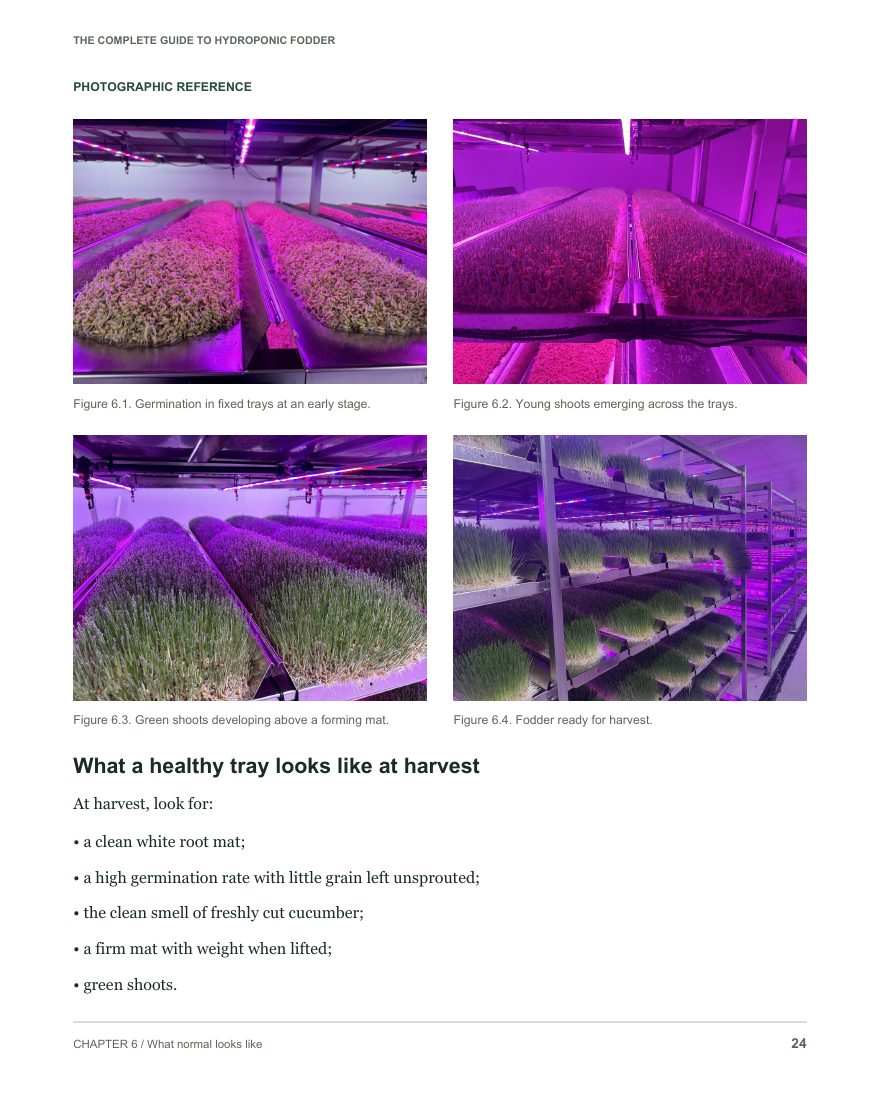
Recognise healthy growth
Photographs of germination and developing fodder, with a harvest checklist.
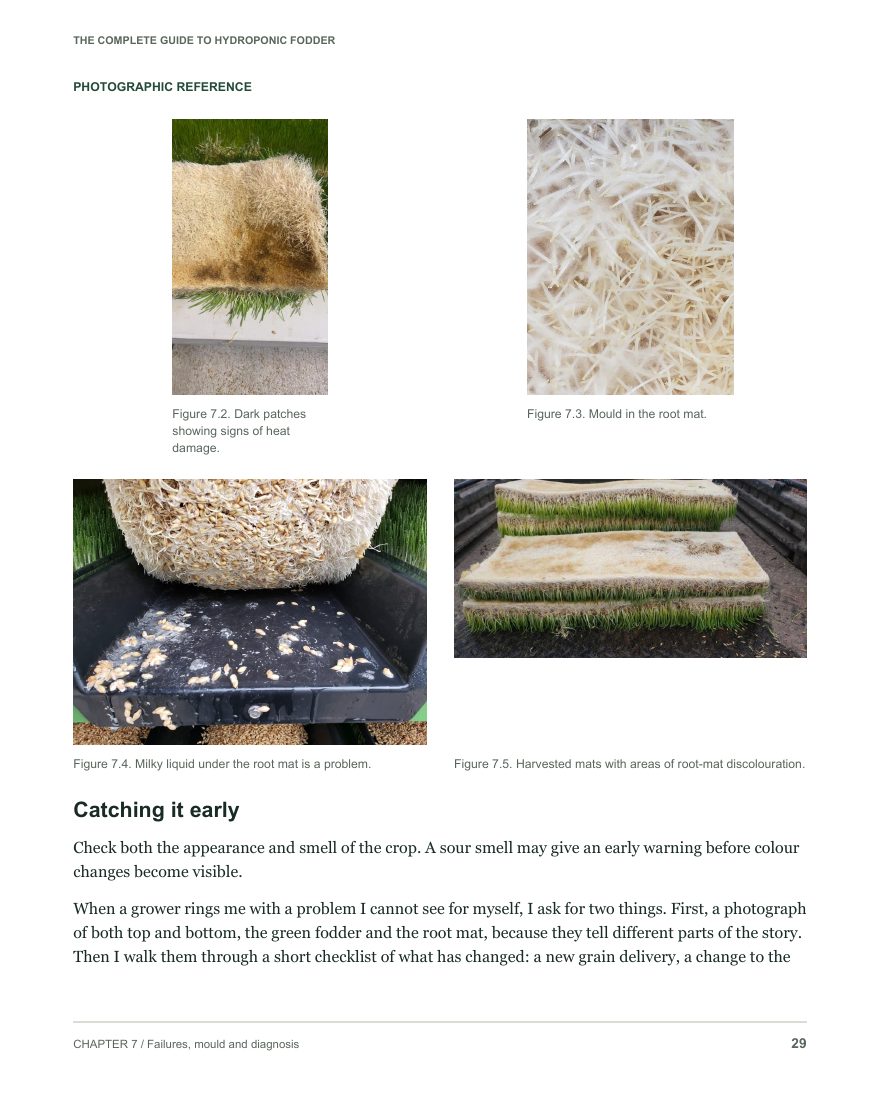
Spot problems early
Captioned photographs showing heat damage, mould and root-mat problems.
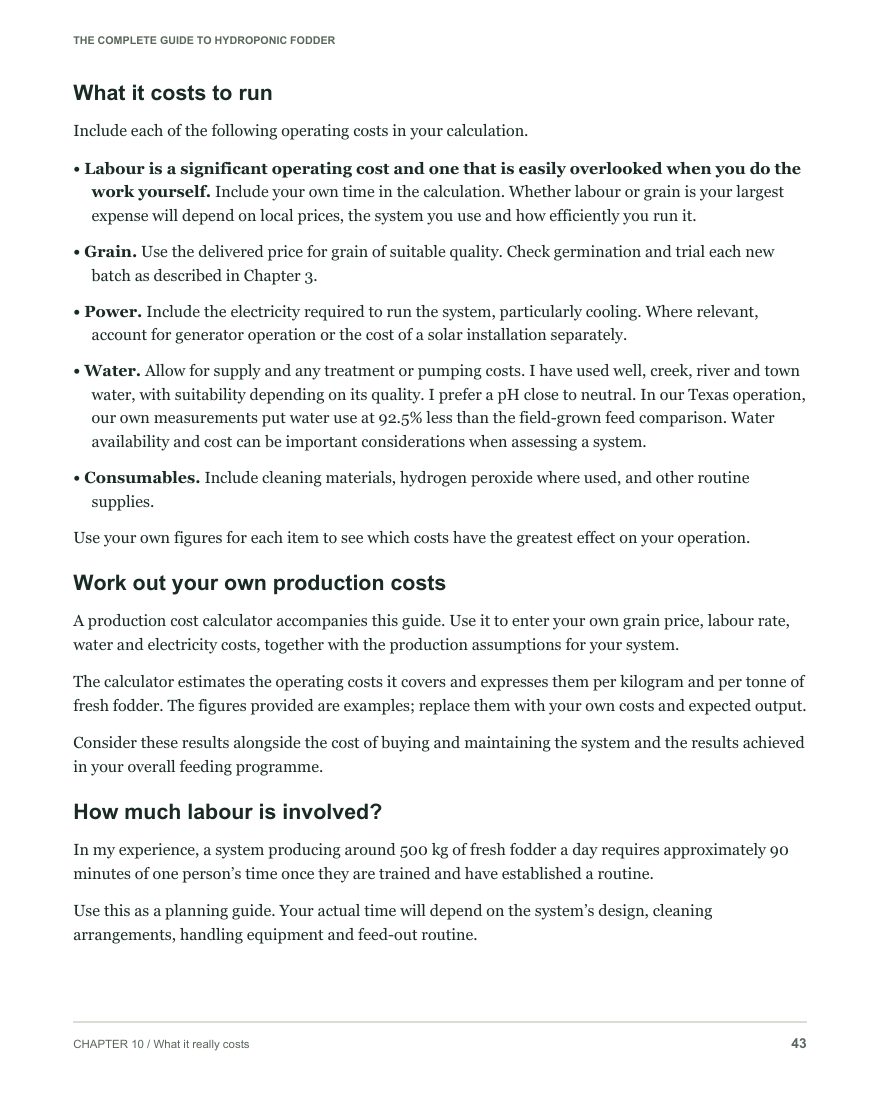
Understand production costs
Practical cost guidance to use alongside your editable spreadsheet.
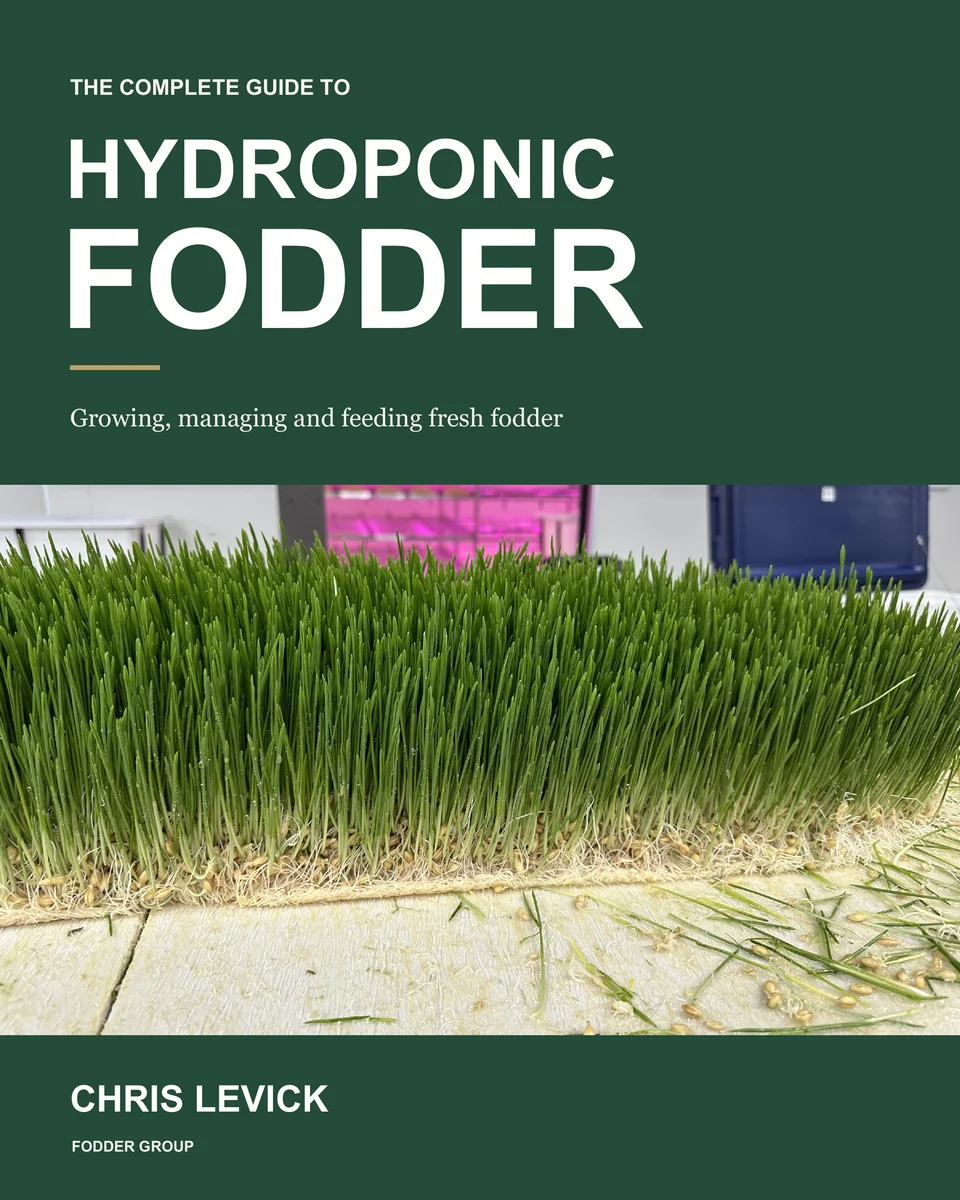
The Complete Guide to Hydroponic Fodder
Growing, managing and feeding fresh fodder. Written by Chris Levick, published by Fodder Group Publishing.
51-page PDF + editable Excel calculator · US $29
Download and keep both files. One payment, with all Version 1.x updates included.
Where this comes from
This isn't theory.
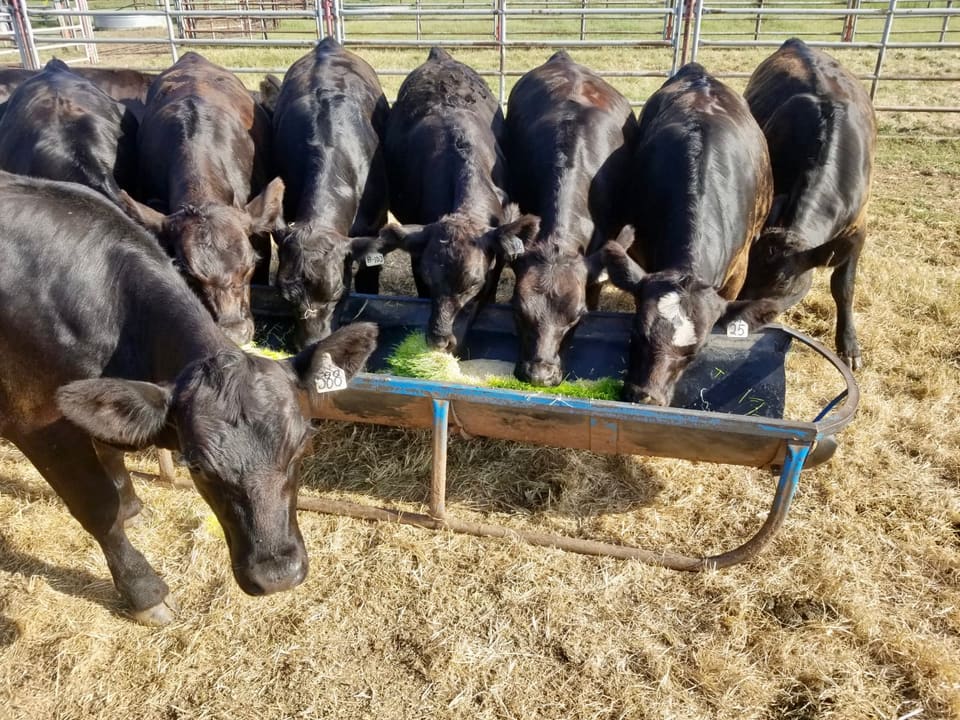
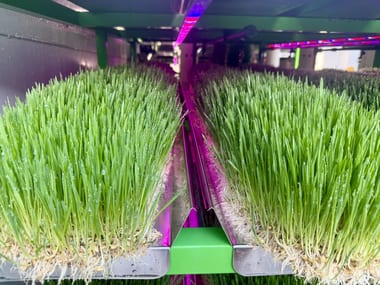
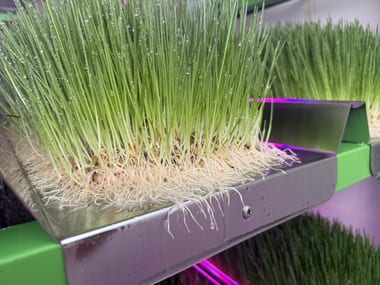
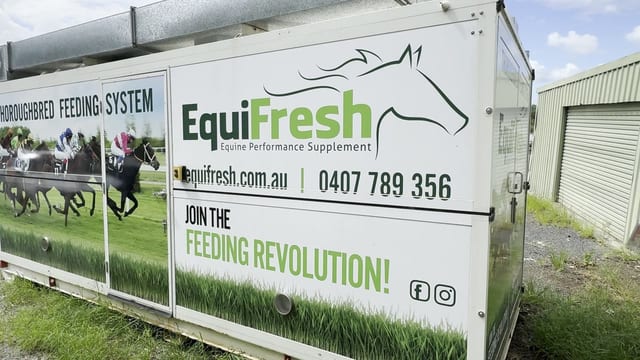
Every photograph below is a Fodder Group system, growing Fodder Group product. The guide is written from operating them, not from reading about them.
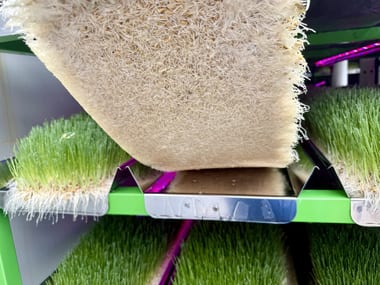
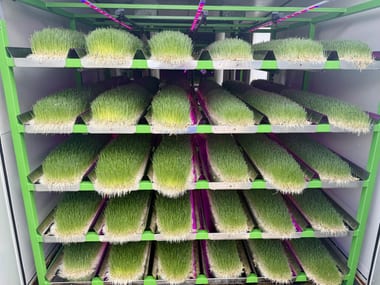
Systems built and advised on in ten countries
- Australia
- New Zealand
- United States
- Canada
- United Kingdom
- South Korea
- United Arab Emirates
- Saudi Arabia
- Barbados
- New Caledonia
Fodder fed over full seasons to beef and dairy cattle, horses, sheep, pigs, camels, poultry and buffalo. And, on one memorable job, zebra, giraffe and Galápagos tortoises.
The part most sellers skip
Sometimes hydroponic fodder is the right decision. Sometimes it isn't.
The goal isn't to convince you to buy a system. It's to help you make your own informed decision before you spend anything.
Fodder tends to work when
- You have little feed on the ground through winter, or you are in a dry region
- You are feeding performance horses, breeding stock or high-value animals
- You can commit to running it every single day, without exception
Think carefully when
- The capital cost is a genuine stretch. This is equipment, and it is not cheap
- Nobody on the property can be relied on to run it seven days a week
- You are comparing it purely on dry matter against a bulk commodity feed
The guide is written to help you reach that judgement yourself, on your own numbers, rather than to sell you on an answer.
Get the guide
The Complete Guide to Hydroponic Fodder
- The complete guide, readable straight away
- Download the PDF and read on any device
- All Version 1.x updates included
- The production cost calculator, interactive and as an editable spreadsheet
- Direct reply from Chris if something doesn't match your operation
Secure payment by Stripe · Digital access, nothing ships · No subscription · Prices in US dollars · All sales final
Questions
Before you buy
Who is the guide for?
Anyone weighing up hydroponic fodder, already running a system that isn't performing, or trying to work out whether the numbers stack up for their operation. It assumes you know your own livestock; it does not assume you know anything about sprouting grain.
What do I receive?
Immediate access to the complete guide, all Version 1.x updates, and the production cost spreadsheet.
Does this cover commercial systems?
Yes. The operational and economic chapters are written from commercial production, not from a hobby setup, and scale down as well as up.
Does it cover different livestock?
Yes. The feeding chapters draw on fodder fed to beef and dairy cattle, horses, sheep, pigs, camels, poultry and buffalo, and cover how the considerations differ between them.
Does Fodder Group sell equipment?
No. Chris stopped manufacturing and now works as an independent advisor. No equipment is sold or built by Fodder Group, and no commission is taken from anyone who does sell it, so there is no brand to steer you towards.
How does access work?
The guide is a downloadable PDF you can save and read on any device, with the calculator included as both an interactive tool and an editable spreadsheet. One payment, no subscription, nothing to cancel.
You can learn hydroponic fodder by trial and error. Or you can start with what I've already learned.
Ten years, ten countries, and every mistake worth making, in one practical guide, for US $29.
Instant access · Practical advice · No subscription

Chris Levick
Founder, Fodder Group Inc · Author, The Complete Guide to Hydroponic Fodder